What Belongs to Me?

The Weight We Quietly Accept
There are moments when a consequential decision becomes difficult not because reality is unclear, but because we are carrying far more than the decision itself.
Without ever consciously choosing to, we begin holding responsibilities that gradually become indistinguishable from our own. We carry the futures of people we love. We try to protect others from disappointments that have not yet arrived. We begin feeling responsible for outcomes no one could ever fully control.
The weight feels real.
That does not always mean it belongs to us.

How We Begin Carrying More
This rarely happens because we are careless.
More often, it happens because we care deeply.
Love has a quiet way of extending our sense of responsibility beyond its natural place.
Loyalty encourages us to protect what matters. Compassion invites us to carry another person's suffering as though it were our own.
These are deeply human responses.
They are also the quiet beginnings of burdens that reality may never have asked us to carry.
Influence Is Not Ownership
Consequential decisions almost always affect other people.
Our choices matter.
Our words have consequences.
The lives around us are touched by what we do.
These things deserve careful consideration.
Recognising that difference quietly changes the nature of what we carry.
What Was Never Placed in Our Hands
Some burdens arrive through circumstance.
Others arrive because we quietly pick them up.
We begin believing that someone else's happiness depends upon us.
That we must somehow prevent every disappointment.
That we are responsible for holding together every possible future before we are allowed to decide.
Much of this is accepted with love.
That does not make it ours.
The Quiet Work of Discernment
There comes a moment when the question itself begins to change.
Not:
How do I carry all of this?
But:
What within all of this is actually mine?
The answer is rarely everything.
Nor is it nothing.
It asks us to recognise where our responsibility genuinely begins, and where another person's life quietly continues beyond it.
Caring Truthfully
This is not about becoming detached.
Nor is it about caring less.
It is about allowing care to remain connected to reality.
There are responsibilities that belong to us.
Promises we have made.
Consequences created by our own choices.
These deserve to be carried well.
There are also burdens that become heavy simply because we quietly accepted them.
The weight may feel exactly the same.
That does not mean it belongs to us.
What Belongs to Me?
Some responsibilities are ours.
They deserve our honesty.
Our courage.
Our care.
Others ask something different of us.
Not to carry them.
But to recognise whose they truly are.
Sometimes the clearest path through a consequential decision begins with the simplest question.
What belongs to me?
Continue Exploring
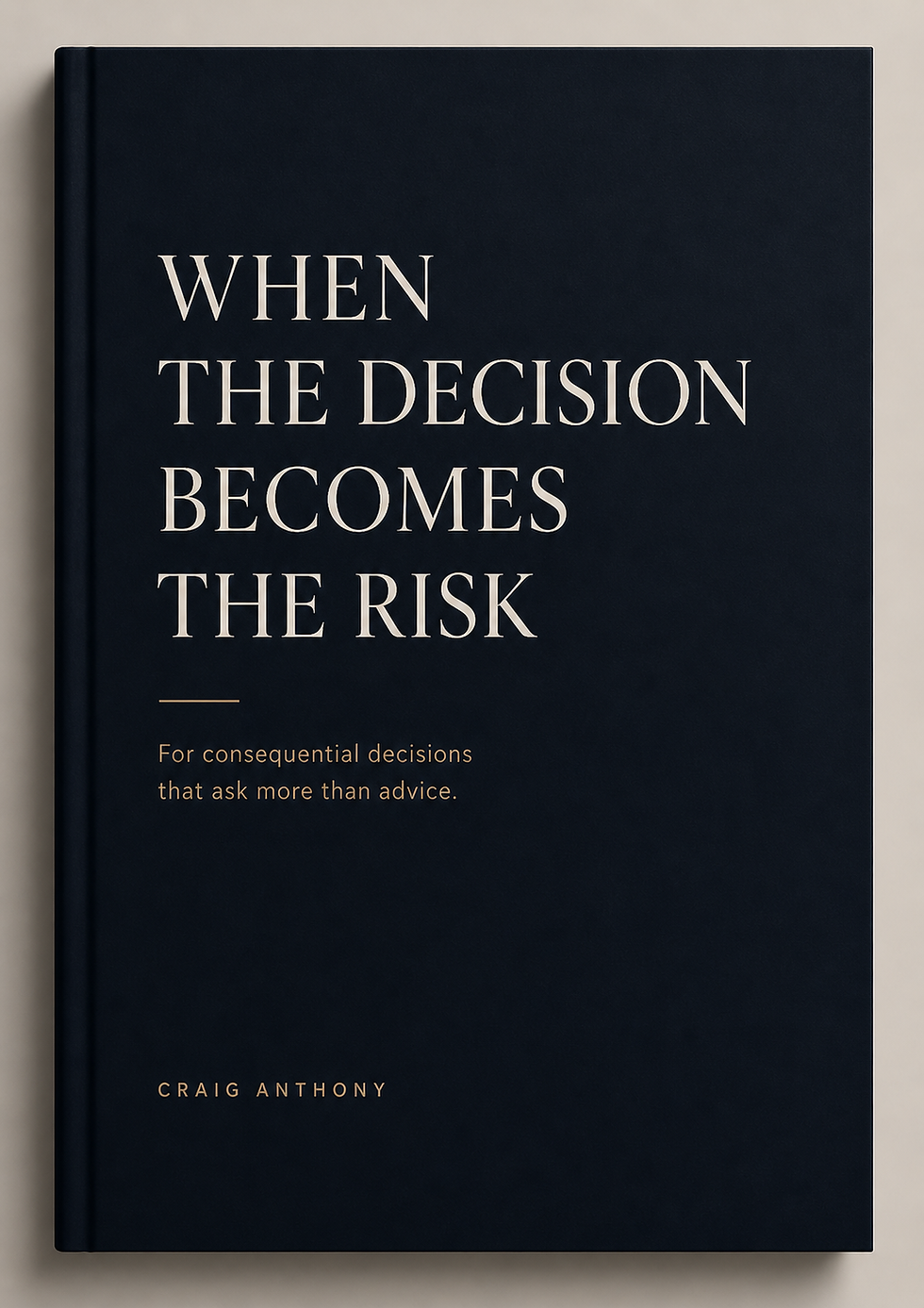
The ideas explored in this Insight form part of the broader work behind the book.
Or


Comments