What Pressure Makes Harder to Examine

Updated: Jul 6
The difficulty is not always the pressure.
The difficulty is what pressure makes harder to examine.
Most discussions about decision making under pressure focus on managing stress.
What interests me is something different.
The way pressure can influence what we notice.
What we overlook.
And what becomes harder to examine while we are carrying it.

Adapting To Pressure
Most capable people can tolerate significant pressure.
In fact, many become very good at it.
They adapt.
They continue performing.
They continue carrying responsibility.
They continue showing up for others.
From the outside, they often appear to be managing well.
The challenge is that pressure rarely arrives alone.
It tends to arrive alongside responsibility.
Expectation.
Uncertainty.
Consequence.
Competing demands.
And over time, these influences begin shaping the way a situation is experienced.
Not because judgment disappears.
But because perspective becomes harder to maintain from within.
Pressure Changes What We Notice
Under pressure, attention naturally narrows.
We become focused on immediate concerns.
The next problem.
The next responsibility.
The next decision.
The next demand.
This can be useful in the short term.
It helps people respond quickly when action is required.
The difficulty is that what receives attention grows more visible.
What receives less attention can slowly disappear from view.
Alternative perspectives.
Longer-term consequences.
Assumptions that have never been challenged.
Questions that remain unresolved.
The challenge is rarely intelligence.
More often, it is that pressure changes what we are able to see clearly from within the situation itself.
Responsibility Creates Its Own Pressures
Responsibility changes the way decisions are experienced.
What appears straightforward from the outside often feels very different from within.
A founder may be thinking about employees, clients, family, reputation, and financial consequences simultaneously.
A leader may be carrying concerns they cannot discuss openly.
A parent may be considering the impact on others before themselves.
The decision itself may be difficult.
The responsibility surrounding it is often what makes it harder to examine.
Because responsibility does not simply add weight.
It changes perspective.
The Things That Remain Unspoken
One of the most overlooked effects of pressure is not stress.
It is silence.
Not the absence of conversation.
The absence of honest examination.
People continue talking.
They continue attending meetings.
They continue discussing practical matters.
Yet the questions that matter most are often left untouched.
The uncertainty.
The doubt.
The concern.
The possibility that something important may need to change.
Over time, what remains unspoken can become just as influential as what is openly discussed.
Creating Distance
Pressure cannot always be removed.
Responsibility cannot always be delegated.
Uncertainty cannot always be resolved.
Yet clarity often improves when enough distance is created to examine the situation properly.
Not distance from the decision.
Distance from the forces shaping the decision.
The urgency.
The assumptions.
The expectations.
The competing pressures.
Because what is difficult to see from within often becomes easier to recognise when it can finally be examined without having to carry all of it at the same time.
The Question Beneath The Pressure
When pressure is present, people often ask:
"How do I manage this?"
Sometimes a more useful question is:
"What is this pressure making harder to examine?"
Because pressure is not always the problem.
Sometimes it is simply the environment in which the real difficulty becomes harder to see.
Over many years of observing consequential decisions, leadership, transition, and responsibility, I have noticed the same pattern repeatedly.
People rarely struggle because they lack capability.
More often, they struggle because the pressures surrounding an important situation make it increasingly difficult to examine clearly.
The situation may be difficult.
The pressure surrounding it may be unavoidable.
Yet understanding what that pressure is making harder to see is often where clarity begins.
The difficulty is not always the pressure.
The difficulty is what pressure makes harder to examine.
Continue Exploring
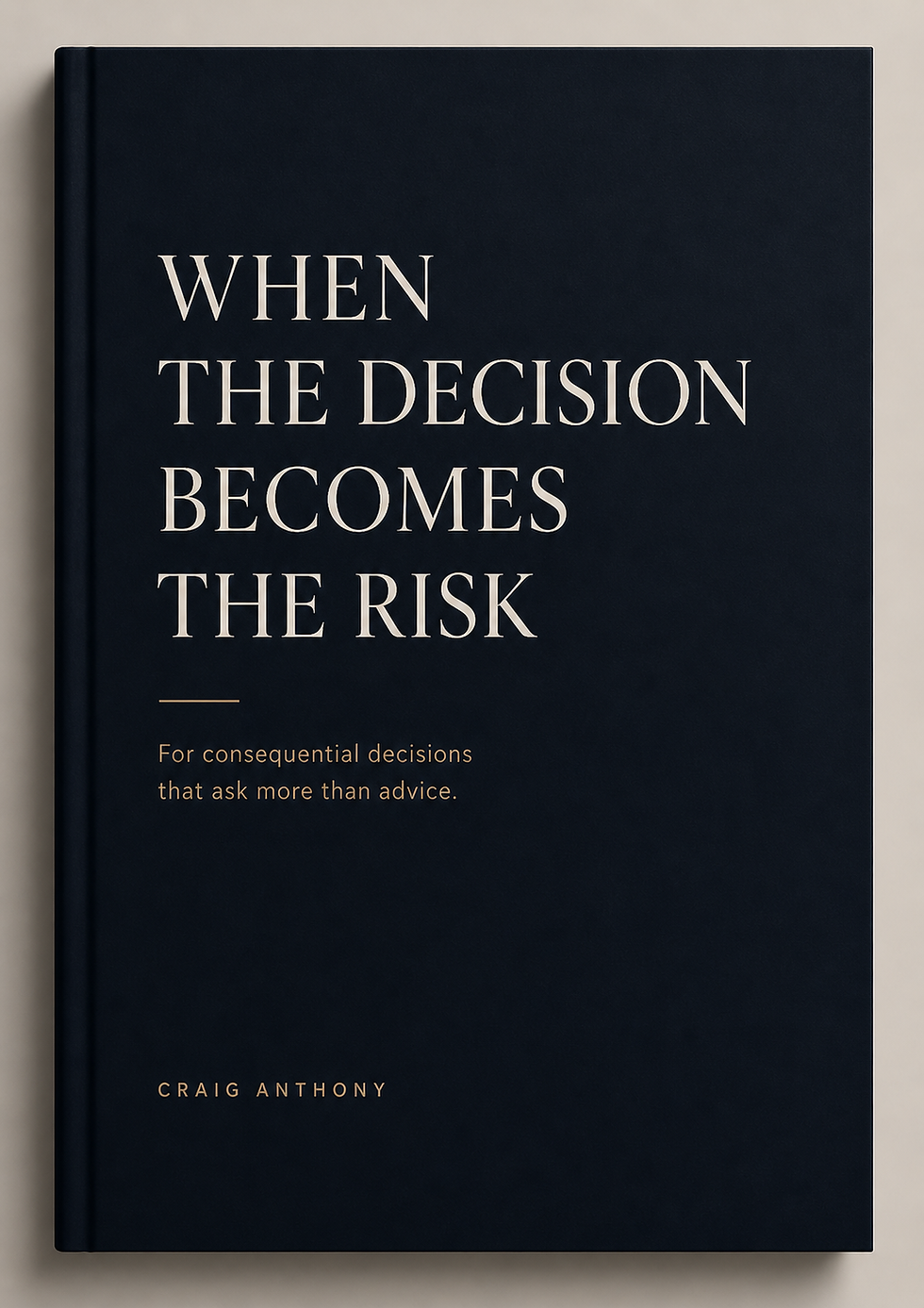
The ideas explored in this Insight form part of the broader work behind the book.
Or


Comments